March Newsletter | IEEPA Tariffs Ruled Illegal — What Importers Must Do Now
TOP NEWS:
Supreme Court Strikes Down IEEPA Tariffs — CBP Stops Collections
On February 20, 2026, the U.S. Supreme Court ruled that the Trump administration’s use of the International Emergency Economic Powers Act (IEEPA) to impose broad reciprocal tariffs exceeded executive authority and was illegal, because IEEPA does not authorize tariffs.
While the President signaled resistance, he did sign an executive order on February 20th directing the heads of the relevant executive branch agencies to cease collection of IEEPA tariffs. As of February 24, 2026, U.S. Customs and Border Protection (CBP) has stopped collecting tariffs under the now-invalid IEEPA authority.
Important to note is that the Court’s decision has no impact on existing tariffs imposed under Section 301 of the Trade Act of 1974, or the tariffs imposed under Section 232 of the Trade Expansion Act of 1962. These include the tariffs on steel, aluminum, copper, automobiles, auto parts, lumber and timber, medium- and heavy-duty trucks, and semiconductors and remain in effect.
STILL PENDING:
CBP Owes You Money. Here's How to Be Ready.
Now that the reciprocal tariffs imposed under emergency authority have been legally struck down and collections have been halted, importers that paid the duties are now considering refund claims. The Supreme Court did not address how refunds would be issued and that decision rests with the United States Court of International Trade. Currently there is no clarity on that process or the timing.
Some believe CBP might simply reverse course and automatically return all collected duties. While that’s possible, refunds are rarely that simple. Given the complexities involved, CBP might rely on its established refund mechanisms. Fortunately, those mechanisms already exist—namely post-summary corrections and protests.
While businesses understandably want immediate refunds, no formal process has yet been announced. Filing protests on liquidated entries now may prove unnecessary, depending on the refund framework CBP ultimately adopts. Recent case law suggests that delays in establishing administrative procedures do not necessarily affect eligibility for refunds, meaning some protective protests could ultimately be unnecessary.
So what can you do while we wait for guidance from CBP?
Start by identifying all entries with a Chapter 99 classification tied to an IEEPA tariff program where duties were paid. As you review, confirm that each entry is accurate in terms of tariff classification and country of origin. Corrections in these areas could materially affect duty liability once IEEPA tariffs are lifted.
Accuracy in classification, valuation, and origin becomes especially important at this stage. After an IEEPA refund is processed, these data points will determine the duties owed under other applicable tariffs within the stacking framework.
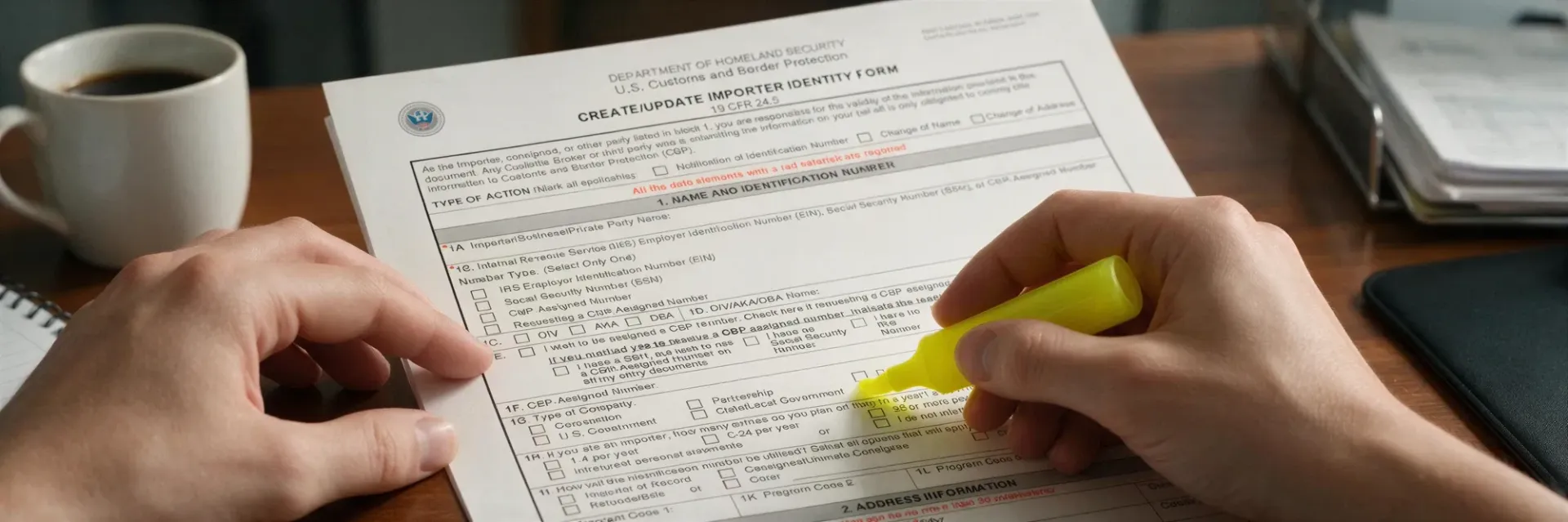
Seeking a refund may require filing a protest and that process involves submitting the entry summary, commercial invoice, customs invoice, and bill of lading. As part of your data-gathering efforts, ensure your record-keeping systems can quickly retrieve these documents.
MORE TARIFF NEWS:
IEEPA Is Out. Section 122 Is In. Here's What Changed.
In immediate response to the Supreme Court ruling, on February 20, 2026, the President issued a proclamation to impose new 10% global tariffs under Section 122 of the Trade Act of 1974.
The Section 122 tariffs went into effect at 12:01 a.m. EST on February 24, 2026, and are limited by statute to remain in place for 150 days (through July 24, 2026), unless extended by Congress. While initially announced at 10%, reports indicated there are plans to increase the rate to 15%.
Imported goods subject to the Section 122 duties will be classified under new Harmonized Tariff Schedule of the United States (“HTSUS”) Subheading 9903.03.01. New subheadings 9903.03.02 through 9903.03.11 will be used to declare various exemptions from the tariffs.
Imports exempt from Section 122 duties include qualifying goods under the United States-Mexico-Canada Agreement (“USMCA”) as well as products detailed in the proclamation, which mirrors the exemptions that were already in effect for tariffs imposed pursuant to the IEEPA tariffs. These include but are not limited to: certain critical minerals, energy and energy products, natural resources and fertilizers that cannot be grown, mined, or otherwise produced in the United States, certain agricultural products, pharmaceuticals and pharmaceutical ingredients, certain electronics, passenger vehicles and other designated vehicles and certain aerospace products.
It is important to note that drawback is available for the duties imposed pursuant to Section 122.
ITM is paying very close attention to all of these developments and will continue to relay information as it becomes available.
GET STARTED HERE
Get actionable advice on cost-saving strategies that boost your bottom line.
Subscribe here: